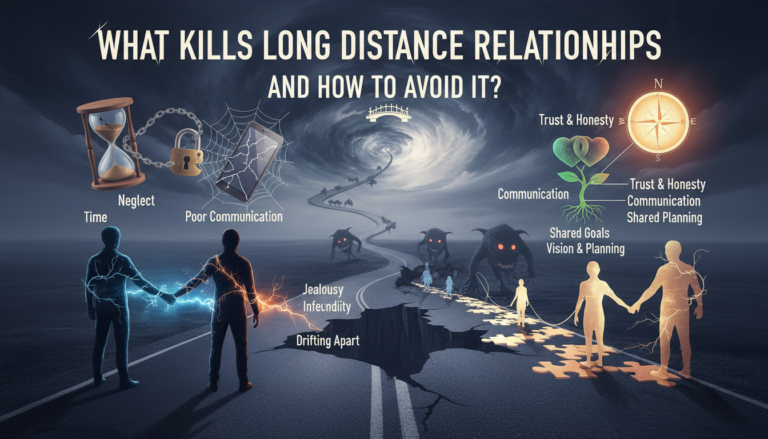
8 Unmistakable Signals It’s Time to Let Go of Your Long-Distance Relationship
The Heart’s Tug of War When Distance Becomes a Divide
Long-distance relationships often begin with a powerful story. Maybe it was a chance encounter during a study abroad program, a work opportunity that pulled one of you across continents, or a connection that blossomed online before geographical realities set in. There’s an undeniable romance in defying miles for love, a sense of shared resilience and commitment that feels truly special. For many in India, where career shifts, higher education, or even family migration can scatter loved ones far and wide, long-distance relationships are not an anomaly but a lived reality.
You invest deeply, convinced that the strength of your bond can conquer any physical separation. You navigate time zones, patchy internet, and the yearning for simple presence. But beneath this inspiring narrative, a quiet question often begins to surface: Is this still serving us? Is the ‘fighting for love’ still worth the daily emotional toll?
Deciding to end a long-distance relationship is rarely about a lack of love. More often, it’s a sober recognition that love, by itself, isn’t always enough to sustain a partnership across significant, indefinite distances. It’s about acknowledging that a relationship needs more than just emotion; it needs shared life, shared space, and a tangible future. If you find yourself wrestling with this difficult truth, here are some honest signals that the miles might have finally won.

1. The Future Feels Like a Fading Promise
When you start a long-distance relationship, there’s usually an unspoken, or sometimes explicit, agreement about an end date for the distance. It could be after a degree, a specific work project, or a certain number of years. This shared vision of eventually closing the gap acts as a powerful anchor, a light at the end of the tunnel that makes the present challenges bearable.
But what happens when that light begins to dim? When conversations about the future become vague, filled with ‘maybes’ and ‘somedays’ instead of concrete plans? Or worse, when one partner consistently defers the discussion, or their ‘plan’ keeps shifting, pushing the finish line further and further away? This isn’t just about logistics; it’s about a fundamental misalignment in priorities. If one person is actively working towards proximity and the other seems content to maintain the status quo indefinitely, it creates an unsustainable imbalance. A relationship thrives on shared momentum, and if your future together feels like a continually receding horizon, it might be time to ask if you’re truly moving forward.
2. Your Lives Have Diverged, Not Just Physically
In the early stages, long-distance partners often make an intense effort to keep each other deeply integrated into their daily lives. You share stories about your new friends, your frustrating commute, the small joys of your day. You feel like you’re growing together, even if apart.
Over time, however, the constant effort required to bridge the gap can become exhausting. You start building separate routines, separate friend circles, and separate interests. You might find yourself having to explain inside jokes, or feeling a disconnect when your partner talks about people or places you’ve never experienced. It’s not just that you’re in different cities; you’re living increasingly different realities. You’re thriving in your local environment, building a life that feels rich and full, but your partner isn’t a part of it in any meaningful, daily way. When your two worlds feel less like parallel tracks moving towards each other and more like divergent paths, it’s a strong indication that the relationship is struggling to keep pace with your individual growth.

3. Communication Becomes a Chore, Not a Connection
Communication is the lifeblood of any long-distance relationship. Without physical presence, words, video calls, and messages become the primary means of connection. Initially, these exchanges are frequent, eager, and deeply satisfying. You spend hours on calls, pouring out your hearts, feeling more connected than ever.
But pay attention when the quality of these interactions changes. Do calls feel less like a natural flow and more like a scheduled obligation? Do you find yourself running out of things to say, or repeating the same updates? Are your conversations dominated by logistical planning for the next visit, rather than genuine emotional sharing? Perhaps you’re constantly checking the clock, hoping the call will end soon, or dreading the moment your phone rings. If the joy and spontaneity of connecting have been replaced by a sense of duty or even resentment, it’s a clear signal. Communication, when forced, loses its power to nourish the bond, leaving both partners feeling isolated despite the constant ping of notifications.
If the joy and spontaneity of connecting have been replaced by a sense of duty or even resentment, it’s a clear signal.
4. Physical Intimacy Is a Deep, Constant Ache
Beyond the emotional and intellectual connection, physical intimacy is a fundamental component of most romantic relationships. This isn’t solely about sex, though that’s certainly a part of it. It’s also about the comforting touch of a hand, a spontaneous hug, the simple reassurance of someone’s presence beside you, the shared silence in a room. These small, everyday physical affirmations are vital for creating a sense of security, belonging, and deep connection.
In a long-distance relationship, this need is often consistently unmet. While technology offers video calls and virtual dates, it can never replicate the warmth of a shared bed or the comfort of a partner’s embrace after a difficult day. Over time, this lack can manifest as a persistent ache, a loneliness that no amount of digital interaction can truly soothe. You might find yourself craving physical affection from others, or feeling a deep emptiness that your partner, through no fault of their own, simply cannot fill from afar. When the absence of physical intimacy becomes a gnawing, constant source of frustration and sadness, it’s a powerful indicator that the relationship might not be meeting your core human needs.
5. You’re Constantly Questioning Their Intentions or Your Own
Trust is paramount in any relationship, but it takes on an amplified significance in a long-distance one. Without the ability to see your partner daily, to observe their habits, their friends, their reactions in real-time, insecurities can easily take root. A delayed text, a vague answer about an evening out, or a change in routine can quickly spiral into doubt and suspicion.
Are you constantly checking their social media, scrutinizing their activity, or demanding detailed accounts of their whereabouts? Do you find yourself playing detective, or needing constant reassurance that they are being faithful and committed? This isn’t just exhausting; it erodes the very foundation of trust. Conversely, you might find yourself questioning your own commitment. Are you feeling tempted by local connections? Are you finding excuses to avoid calls? If either partner is experiencing a persistent sense of doubt, either about the other’s fidelity or their own desire to maintain the relationship, it’s a critical signal that the bond is under severe strain.
- Are you finding it hard to believe their stories?
- Do small discrepancies trigger significant anxiety?
- Are you secretly exploring other options or connections?
6. Your Local Life Feels More Fulfilling Than Your Relationship
One of the quietest, yet most profound, shifts in a long-distance relationship can be realizing that the life you’re building locally feels more vibrant and satisfying than the connection you’re trying to maintain across miles. You’re surrounded by friends, engaging in hobbies, pursuing career goals, and creating a rich, immediate existence.
When you compare the energy and joy you derive from your local friendships, your work, or your personal pursuits to the emotional effort and often limited returns of your long-distance relationship, the contrast can be stark. You might find yourself prioritizing local plans over scheduled calls, feeling relieved when a video chat is cancelled, or even resenting the time and emotional space your long-distance partner demands. This isn’t necessarily a sign of malice; it’s a natural consequence of human beings seeking connection and fulfillment where they are. If your happiness and sense of belonging are increasingly rooted in your immediate environment, and your relationship feels like an anchor rather than a sail, it’s a powerful indicator of where your heart truly lies.

7. The Effort Outweighs the Joy
Every relationship requires effort, but in a long-distance one, the investment can feel disproportionately high. There’s the financial cost of travel, the emotional toll of constant longing, the logistical dance of time zones, and the mental energy spent explaining your unique situation to others. In the beginning, the joy and anticipation of reunions, the depth of conversation, and the sheer romance of overcoming obstacles often make this effort feel worthwhile.
However, there comes a point when the balance shifts. You might notice that the anticipation of a visit is overshadowed by the stress of planning it, or that the joy of seeing your partner is quickly followed by the pang of separation anxiety. You might feel perpetually drained, constantly sacrificing your local life, your sleep, or your peace of mind to keep the connection alive. If the relationship feels more like a demanding project than a source of comfort and happiness, if the sacrifices begin to feel like resentment, and if the moments of joy are few and far between, it’s a clear sign that the scales have tipped too far.
8. There’s No Concrete Plan to Close the Gap
This signal builds upon the fading promise of the future, but it focuses specifically on the practical, actionable steps. A sustainable long-distance relationship, by its very nature, must be temporary. It needs a tangible strategy, a roadmap for how and when the distance will cease to be a defining characteristic of your relationship.
Are you both actively discussing and planning for co-location? Are you saving money together for a move, researching job opportunities in a shared city, or making real sacrifices to enable one of you to relocate? Or are these conversations always hypothetical, always pushed to the ‘later’ that never arrives? If months turn into years, and the ‘when’ and ‘how’ of closing the gap remain stubbornly undefined, it suggests a lack of shared commitment to a future in the same physical space. Without a concrete plan, the long-distance relationship isn’t a temporary phase; it’s simply the relationship, indefinitely prolonged, and that’s a truth few hearts can truly sustain.
9. You’re Holding Onto an Idea, Not a Person
Long-distance relationships, by their very nature, can foster an idealized version of a partner. You see them at their best: during planned visits, in carefully crafted messages, or in conversations where you both put your best foot forward. You don’t witness their daily struggles, their mundane habits, their less-than-charming quirks, or their reactions to everyday stress. It’s easy to fall in love with the ‘highlight reel’ version of someone, or even an entirely imagined persona that fills the emotional gaps left by their physical absence.
This ‘idea’ of a person can be incredibly compelling, almost like a character in a favourite story. But real, lasting relationships are built on knowing and loving the whole person – their strengths, their flaws, their messy parts, and their quiet, ordinary presence. If you find that the reality of your partner, especially during visits, feels different or less fulfilling than the image you carry in your mind, or if you’re constantly making excuses for discrepancies, you might be holding onto a fantasy rather than a living, breathing relationship. Recognizing this distinction is crucial, as true connection requires seeing and accepting the person, not just the dream.
Letting go of a long-distance relationship is a profoundly difficult decision, often accompanied by guilt, sadness, and the fear of regret. It means acknowledging that sometimes, love isn’t enough to overcome the fundamental human need for shared daily life and physical presence. It’s an act of self-compassion, a recognition that you deserve a connection that thrives not just in moments of intense effort, but in the quiet, ordinary rhythm of life. Sometimes, the bravest act of love is to release what no longer serves your highest good, allowing both hearts the freedom to find a love that truly bridges the gap.

At Heart Notes, we believe that feelings are powerful, stories heal, and the right words can touch a heart in ways nothing else can. Whether it’s love, heartbreak, self-growth, friendship, or those late-night thoughts you can’t explain — we write about it all.